
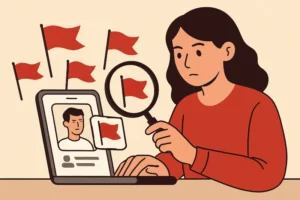
Online Dating Red flags
How to Spot Trouble Before It Hurts
Online dating can be thrilling—a spark of possibility, a swipe toward romance. But beneath the charm, there can be shadows. Red flags aren’t just warning signs; they’re emotional cues that something isn’t right. Learning to spot them early can protect your heart and help you build genuine, respectful connections.
Whether you’re new to dating apps or a seasoned swiper, this guide will help you navigate the emotional landscape with clarity and confidence.
What Are Online Dating Red Flags?
Red flags are behaviors or patterns that signal potential deception, manipulation, or emotional harm. They’re not always obvious—but they often show up as:
- Inconsistent stories or evasive answers
- Overly intense affection too soon
- Refusal to meet in person or video chat
- Requests for money or personal information
- Disrespectful or controlling behavior
Spotting these signs early helps you stay grounded and avoid emotional entanglement with someone who doesn’t have your best interests at heart.
Red Flags in Communication
Words matter. The way someone communicates can reveal their intentions, emotional maturity, and respect for boundaries.
Watch out for:
- Love bombing: Excessive compliments or declarations of love early on
- Ghosting and breadcrumbing: Disappearing and reappearing without explanation
- Gaslighting: Making you doubt your feelings or memory
- Inconsistent tone: Sweet one moment, cold or aggressive the next
Healthy communication is consistent, respectful, and emotionally honest. If someone’s words leave you confused or anxious, it’s time to pause and reassess.
Emotional Manipulation Tactics
Manipulators often use emotional tactics to gain control or sympathy. These can be subtle but damaging.
Common signs include:
- Guilt-tripping: Making you feel bad for setting boundaries
- Playing the victim: Constant crises or drama to elicit sympathy
- Jealousy games: Trying to make you feel insecure or compete for attention
- Isolation: Discouraging you from talking to friends or family
Emotional manipulation erodes trust and self-esteem. Real love uplifts—it doesn’t confuse or control.
How to Spot Catfishing
Catfishing is when someone creates a fake identity online to deceive others. It’s not just a scam—it’s a betrayal of trust.
Here’s how to spot it:
- Avoids video calls or real-time interaction
- Uses overly perfect or stock-like photos
- Shares vague or inconsistent stories
- Asks for money or gifts
- Mirrors your personality too perfectly
Use reverse image search tools and trust your instincts. If something feels off, it probably is.
Safe Online Dating Practices
Safety isn’t just physical—it’s emotional. Here’s how to protect yourself while staying open to love:
- Keep personal info private until trust is built
- Meet in public places and tell a friend
- Trust your gut—intuition is powerful
- Verify identity with video calls
- Set clear boundaries and stick to them
- Take breaks when needed to recharge
At OzMate, we believe safety and romance go hand in hand. When you feel secure, you’re free to be vulnerable, curious, and truly yourself.
Final Thoughts
Online dating is a journey—sometimes messy, sometimes magical. By learning to spot red flags and honor your emotional boundaries, you create space for real connection. You deserve respect, honesty, and joy. Don’t settle for less.
Stay curious. Stay safe. Stay open to love.
If you would like to drop us a line or make a comment, we would love to hear from you. Go to our Contact us page
Frequently Asked Questions About Online Dating Red Flags
What are the most common online dating red flags
The most common red flags include inconsistent stories, refusal to meet in person, overly intense affection early on (love bombing), and requests for money or personal information. These behaviors often signal emotional manipulation or deception. Red flags can include love-bombing, inconsistent communication, refusal to meet in person, and overly vague profiles. For a detailed list, check out Roast Dating’s guide to 21 red flags.
How can I tell if someone is catfishing me
Catfishers often avoid video calls, use overly polished or stock-like photos, and share vague or dramatic backstories. If they mirror your personality too perfectly or ask for money, it’s time to investigate. Use reverse image search tools and trust your gut.
What are red flags in online communication
Watch for ghosting, breadcrumbing, gaslighting, and sudden shifts in tone. Healthy communication is consistent, respectful, and emotionally honest. If someone’s messages leave you feeling confused or anxious, that’s a red flag
What is Breadcrumbing?
Breadcrumbing is a subtle but emotionally manipulative dating behavior. It happens when someone gives you just enough attention—tiny “crumbs”—to keep you interested, but never commits or follows through with genuine connection.
What are safe online dating practices
Protect your personal information, meet in public places, verify identities with video calls, and set clear boundaries. Always trust your intuition and take breaks when needed. Safety empowers you to connect authentically.
Can red flags be subtle or emotional
Absolutely. Emotional manipulation—like guilt-tripping, playing the victim, or isolating you from others—can be harder to spot but just as harmful. Pay attention to how someone makes you feel over time. Real connection should feel safe and uplifting.
How can I tell if someone is emotionally manipulating me online?
Tactics like guilt-tripping, gaslighting, and rushing intimacy are signs of manipulation. Psychotherapist Peggy Bolcoa offers insights in her article on red flags in online dating.
Are there any expert-backed resources on dating red flags and green flags?
Yes—Amy Chan, a dating coach featured on MindBodyGreen, shares expert advice on red and green flags in relationships.
Where can I find a comprehensive list of online dating red flags?
TheDatingVibes offers a breakdown of 20 red flags, including boundary violations and psychological warning signs.